



-
Ice Control
Ice control is the collective term for everything we do to keep roads, pavements, driveways and areas passable when temperatures drop to or below freezing. In the Netherlands, this is a serious task: in an average winter, conditions are slippery on between 40 and 60 days. For municipalities and road managers, preventive salting has been standard practice for years. But private individuals, homeowners' associations and businesses also have the responsibility to keep their own areas safe.
Road salt is by far the most well-known method used for this purpose. It lowers the freezing point of water, causing ice to melt or not form at all. A simple principle with a significant effect. In addition, urea can be used in specific areas with delicate surfaces to safely and effectively combat icy conditions.

-
Which De-icing Agent for Which Situation?
Not every de-icing agent works equally well under the same conditions. At Nederlandse Zouthandel, we supply the two most commonly used products:
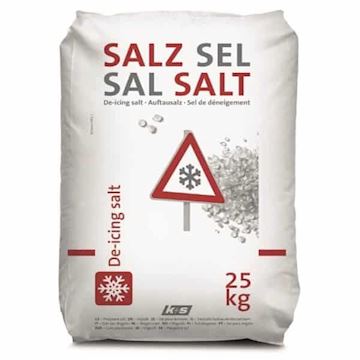
K+S Rock Salt Granules (25 kg): classic road salt based on sodium chloride. Suitable for the vast majority of situations in a Dutch winter, effective down to approximately minus 7 degrees. This is the standard choice for driveways, pavements, car parks and municipal roads.
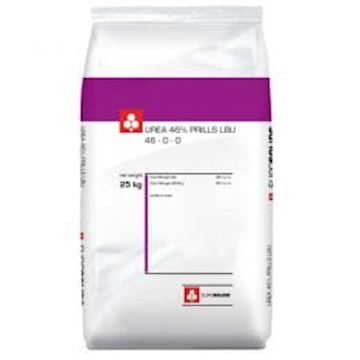
Urea De-icing Granules (25 kg): a non-corrosive alternative based on urea, significantly friendlier to concrete, metal and plants than classic road salt. The right choice for:
- Fresh concrete, less than one year old
- Parking garages and basements with steel structures
- Neighborhoods with lots of greenery or borders along the sidewalk
- Locations where pets frequently walk
For extreme cold down to approximately minus 30 degrees, calcium chloride is sometimes used in practice. In an average Dutch winter this is rarely necessary, but for specific industrial situations or professional winter services it is available on request.

-
How does road salt work?
Road salt is mostly composed of sodium chloride (NaCl), the same basic molecule as table salt. Once the salt comes into contact with ice or a thin layer of water, it dissolves and forms brine. This brine has an important characteristic: its freezing point is much lower than that of pure water. Only below approximately minus 7 degrees Celsius does the salt lose its effectiveness, as the brine itself then freezes.
Two things actually happen simultaneously when you spread salt:
- Melting. The salt turns existing ice and frozen snow back into liquid form.
- Prevention. The resulting brine keeps the surface wet and prevents new water or snow from freezing.
How Much Road Salt Per Square Meter?
The right amount depends on the situation:
- Preventive spreading: 10 to 15 grams per m².
- Light snowfall or sleet: 20 to 30 grams per m².
- Ice layers or compacted snow: 30 to 40 grams per m², preferably in two rounds.
An example calculation for a typical residential situation:
- Driveway of 50 m²: approximately 0.5 to 2 kilos per spreading session.
- Sidewalk of 20 m² along the house: about 200 to 800 grams per session.
- Business premises of 500 m²: 5 to 20 kilos per spreading session.
-
When is the best time to spread salt?
Preventive salting is proven to be more effective than spreading salt after the fact. As soon as the weather forecast predicts frost, snow or ice, it is best to spread your salt before the precipitation. The salt then forms a brine layer that prevents snow from sticking to the road surface or ice from forming a slippery layer. This also saves you a great deal of work shovelling and scraping the next morning.
Did winter catch you off guard? No problem. Spread salt as soon as possible, possibly in two rounds. A first layer to break the ice, and after half an hour to an hour, a second layer to complete the melting process.
A few practical tips
- Preferably spread salt in the evening or early morning, before rush hour.
- Combine with snow shovelling in heavy snow.
- Remove the loose snow first, then spread salt.
- Distribute the salt evenly with a hand spreader, salt spreader or regular shovel. Spreading too thickly does not help and is mainly wasteful.
-
De-icing salt for business customers
Do you manage a site, building complex, fleet or public space? It involves more than just a few bags of salt in the shed. At Nederlandse Zouthandel, we provide framework agreements, annual contracts and emergency deliveries for, among others:
- Municipalities, provinces, and road authorities
- Homeowners' associations and property managers
- Facility service providers and cleaning companies
- Logistics and transport companies
- Healthcare institutions, schools, and childcare centers
- Retail, hospitality, and recreation businesses
- Construction and infrastructure companies
We deliver from a single package of 4x 25 kg to multiple pallets or big bags per load or per truck, with fast nationwide distribution. During weather alerts, our logistics partners are ready for emergency delivery. Contact us at info@nederlandsezouthandel.nl for your specific needs; we are happy to assist you.
-
Order de-icing salt at Nederlandse Zouthandel
You can order de-icing salt online from us exclusively in 25 kg bags, bundled in sets of four (totalling 100 kg per package), or 10, 25 or 40 bags per pallet. Orders placed before 3:00 PM on weekdays are shipped the same business day.
We also deliver multiple pallets or big bags per shipment or per full truckload upon request, with fast nationwide distribution. During weather alerts, our logistics partners are ready for urgent delivery.
Contact us at info@nederlandsezouthandel.nl for your specific needs; we are happy to assist you.
-
One tip: purchase your de-icing salt outside of the winter season. Prices are more stable then, and you are assured of stock before the first frost hits. During an acute cold snap, supplies throughout the Netherlands can sometimes sell out within a few days. At Nederlandse Zouthandel, we do everything we can to continue supplying you with de-icing salt despite declining stocks.
Frequently Asked Questions about Ice Control
-
What temperature does road salt work up to?

Classic road salt (sodium chloride) is effective down to about minus 7 degrees Celsius. At lower temperatures, its effectiveness decreases significantly. For extreme cold down to about minus 30 degrees, calcium chloride is a more suitable choice and is available upon request at Nederlandse Zouthandel.
-
Is road salt harmful to the environment?
Not in normal amounts, but unnecessary overdosing leads to leaching into groundwater and damage to vegetation along roads and paths. Therefore, only spread where necessary and with the right amount. For environmentally sensitive areas, urea de-icing pellets are a friendlier alternative.
-
How long does road salt last?
Road salt is essentially indefinitely shelf-stable, provided you store it dry and sealed. Keep the bag in its original packaging in a frost-free, dry place. A bag you buy this year can easily be used next year. It is possible that the salt may 'harden': since there is no anti-caking agent in the salt, it can eventually return to its original state (as hard as stone). Our unsalted advice is to throw the bag flat on the ground a few times, after which the salt will become spreadable again.
-
Should I use salt or sand?
That depends on what you want to achieve. Salt actually melts the ice and keeps the surface ice-free. Sand doesn't melt anything but only provides extra grip on a slippery surface. On sensitive surfaces such as fresh concrete or gravel paths near plants, sand can be a good compromise. Otherwise, we recommend using de-icing salt or urea on delicate surfaces.
-
Can I spread salt on my street myself?
On your own driveway and sidewalk, that's perfectly fine. Many municipalities even appreciate it when residents keep their own section of the sidewalk ice-free. For public roads, the municipality remains responsible; it's better to let the municipal gritting service handle that.
-
How many bags do I need for a winter?
An average individual can get through an entire winter season with one 25 kg bag. Our tip is to place an order for 4x25kg and share the 4 bags with your neighbors. Do you have a long driveway, a large business premises, or an association with multiple entrances? Then count on two to four bags for personal use.