



-
Water Softening: Soft Water Thanks to Salt
In large parts of the Netherlands, hard water comes from the tap: water that is rich in dissolved limescale (calcium and magnesium salts). This causes the well-known white deposits on taps, glasses, and in the washing machine, and it shortens the lifespan of almost any appliance that works with hot water. A water softener solves this by removing the limescale from the tap water before it reaches your tap. But did you know that such a softener would do nothing at all without salt? On this page, we explain the role salt plays in water softening, how the process works exactly, and what type of salt you need.

-
What is hard water?
The hardness of tap water is expressed in German degrees of hardness (°dH). The higher the number, the more limescale in the water:
- 0 – 4 °dH: very soft water
- 4 – 8 °dH: soft water
- 8 – 12 °dH: medium
- 12 – 18 °dH: hard water
- > 18 °dH: very hard water
In a large part of the Netherlands, including North and South Holland, Utrecht, parts of North Brabant and Limburg, the hardness ranges between 8 and 15 °dH. This is enough to cause visible limescale on taps, in shower cabins, and in appliances such as washing machines, dishwashers, coffee machines and boilers within a few months.
-
How does a water softener work?
A water softener is a relatively simple and highly effective device that operates on the principle of ion exchange. At the heart of the softener is a synthetic resin in the form of small beads. This resin is charged with sodium ions (Na⁺).
The process occurs in two phases:
- Softening phase. The hard tap water flows through the resin. The calcium (Ca²⁺) and magnesium ions (Mg²⁺) in the water are attracted to the resin and stick to the beads. In exchange, the resin releases sodium ions, which accompany the water. The result: the water coming out of the softener is limescale-free and soft.
- Regeneration phase. Over time, the resin becomes saturated with calcium and magnesium and can no longer capture new limescale. At this point, the resin needs to be rinsed with a salty brine solution from the salt tank. The very high concentration of sodium ions in the brine displaces the calcium and magnesium ions from the resin, which are then flushed away with the rinse water into the sewer. The resin is then recharged with sodium and ready for a new softening cycle.
Modern water softeners manage this regeneration cycle fully automatically, often based on water usage or a time setting. The only thing you need to do is refill the salt tank in time.
-
Why is salt indispensable in this process?
Without salt, there is no regeneration, and without regeneration, the resin becomes saturated. From that moment, the softener allows hard water to pass through and you essentially have an expensive device that no longer functions. The salt in the brine tank gradually dissolves in the water between the salt crystals, forming the brine that regenerates the resin.
Important to realise: the salt does not end up in your drinking water. The brine is solely used to rinse the resin clean and then disappears through the sewage system. The minimal increase in sodium content in the soft water from the tap remains well below drinking water standards.
-
Which salt does your water softener need?
Not all salt is suitable. For a water softener, use pure water softener salt with a NaCl purity of at least 99.8% and without additives such as anti-caking agents, iodine or fluoride. These substances could contaminate or damage the resin, and replacing the resin is an expensive affair.
Please note: road salt, rock salt and table salt are never suitable. They contain impurities (sand, mud, trace elements) or additives that can significantly shorten the lifespan of your installation.
Water softener salt is available in three forms:
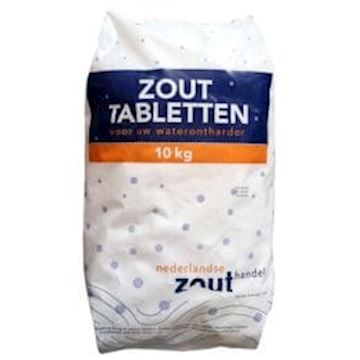
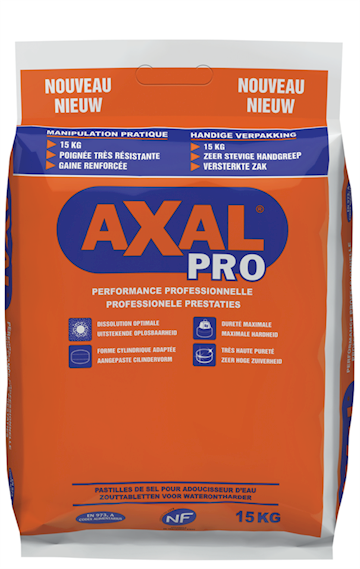
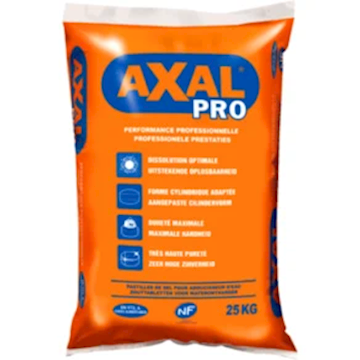
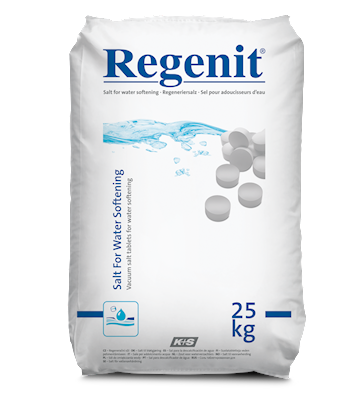
- Salt tablets — tablets pressed under high pressure, suitable for almost every modern water softener. They dissolve evenly without forming salt sludge.
- Salt granules (granulate) — for older or professional installations that do not process tablets. A grain size of 6 to 15 mm is common here.
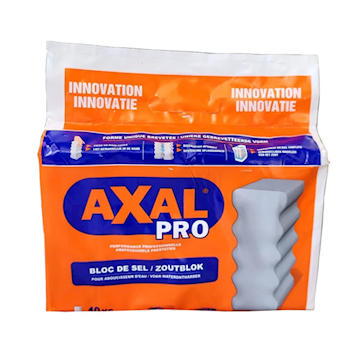
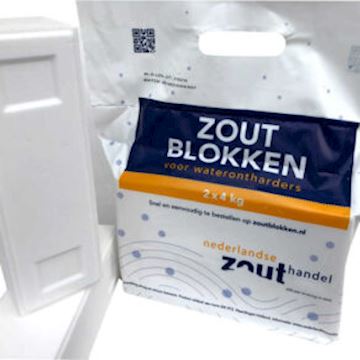
- Salt blocks — large, solid blocks for specific softeners such as Harvey, Aquacell, Kinetico, and TwinTec.
Always check the manual of your water softener to see which form the manufacturer prescribes. Not sure? Contact our customer service and we will find out which salt fits your softener.
-
What are the benefits of water softening?
Softened water offers immediately noticeable advantages throughout your entire household:
- No limescale on faucets, showerheads, glassware, tiles, and sanitary ware.
- Longer lifespan for washing machines, dishwashers, coffee makers, boilers, and central heating systems.
- Less cleaning work — you can largely eliminate limescale removers and vinegar from your home.
- Less detergent and soap needed — sometimes up to half, because soft water lathers more quickly.
- Softer skin and shinier hair after showering, and softer laundry from the washing machine.
- Lower energy bills — even a thin layer of limescale in a boiler or central heating system significantly increases energy consumption, as the water takes longer to heat.
For an average household, a water softener pays for itself within a few years due to the longer lifespan of appliances, reduced energy and detergent consumption, and savings on limescale removers and repairs.
-
How much salt does a water softener use?
The consumption depends on three factors: the hardness of your tap water, the water usage in your home, and the capacity of your softener. A few guidelines:
- Small household (1–2 people) in a soft water area: sometimes less than 15 kg per year.
- Average four-person household in a hard water area (10–15 °dH): approximately 25 to 50 kg per year, or one to two 25 kg bags.
- Larger family or very hard water (> 15 °dH): 75 kg or more per year.
We recommend always keeping at least one spare bag in stock. Most water softeners only alert you when the salt level is already low, and at that point, it's important to refill quickly, otherwise, lime can break through and your system can become "contaminated" with hard water again.
Water Softening Salt Range

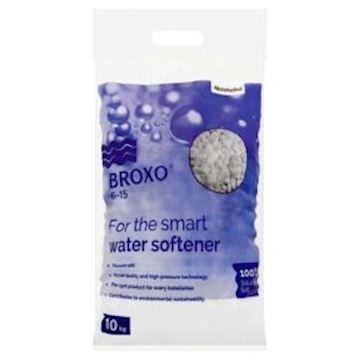
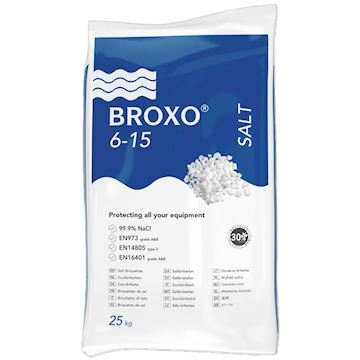
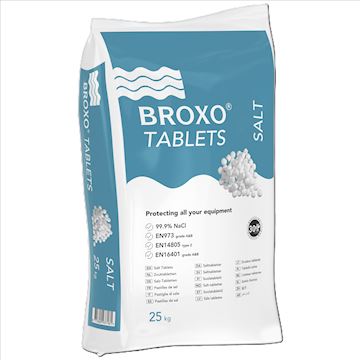
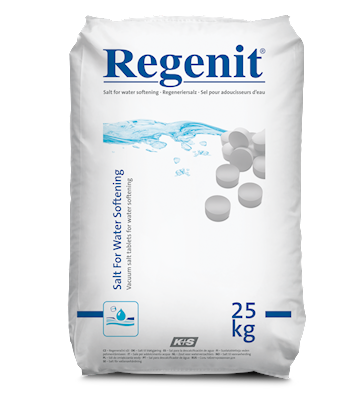
-
Order Water Softening Salt at Nederlandse Zouthandel
At Nederlandse Zouthandel, you will find all trusted brands of water softener salt in stock: Regenit, Axal Pro, Broxo and nedzal®. Available in handy 10 or 15 kg bags, standard 25 kg bags, and economically by the pallet.
Orders placed before 3:00 PM on weekdays are shipped the same business day, with fast nationwide delivery — for smaller orders even as a regular parcel, so you do not need to stay home for a truck delivery.
We also deliver multiple pallets or big bags per shipment or per full truckload upon request, with fast nationwide distribution.
Contact us at info@nederlandsezouthandel.nl for your specific needs; we are happy to help you find the right solution.
-
We also deliver multiple pallets or big bags per shipment or per full truckload upon request, with fast nationwide distribution.
Contact us at info@nederlandsezouthandel.nl for your specific needs; we are happy to brainstorm with you.
Frequently Asked Questions About Water Softener Salt
-
What is the difference between water softener salt and regular salt?

Water softener salt has a higher purity (99.8%+) than table salt or road salt and contains no anti-caking agents, iodine or other additives. Those substances would contaminate or damage the ion exchange resin in your water softener.
-
Can I use rock salt or coarse salt in my water softener?
No. Road salt and rock salt contain impurities (sand, mud, trace elements) that clog your resin and damage the installation. Only use salt that is explicitly sold as water softener salt, regeneration salt or water conditioner salt.
-
How much softening salt does a water softener use per year?
An average four-person household in a hard water area uses 25 to 50 kg per year. With very hard water or intensive use, this can rise to 75 kg or more.
-
Can I let my water softener run empty?
Preferably not. If the salt runs out completely, the softener can no longer regenerate and limescale will break through. Refill in time — for example, as soon as you have about a quarter of the tank remaining.
-
Where can I buy water softener salt?
At Nederlandse Zouthandel you order water softener salt directly online. Ordered before 15:00 on working days means dispatched the same day, with delivery throughout the Netherlands.